Overview
There is a particular kind of trip that only makes sense in the south — where you begin in a temple city that has been awake for two thousand years, and end four days later with your feet in the Arabian Sea. This route runs the length of the peninsula, from Madurai down to the very tip of India and around the corner into Kerala, and it does it without ever feeling rushed.
It works because the distances are honest. Madurai to Rameswaram is four hours. Rameswaram to Kanyakumari is the long day, six to seven, and we say so rather than pretending otherwise. Kanyakumari to Kovalam is barely two and a half. Nobody spends their holiday watching the inside of a car.
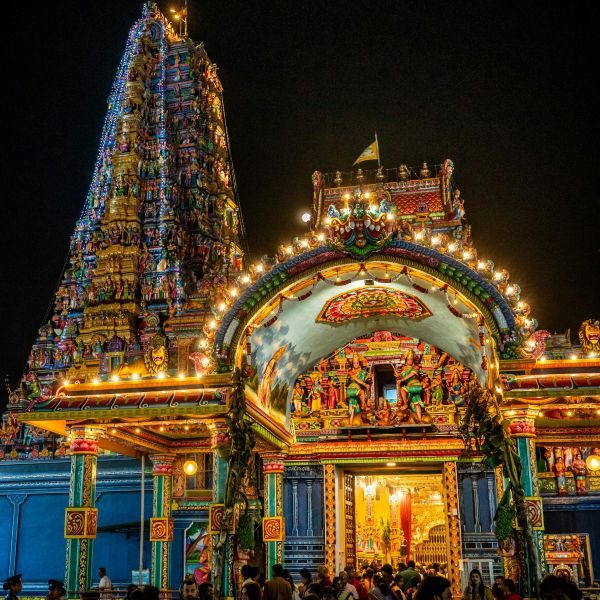
Madurai is where it starts, and the Meenakshi Amman Temple is the reason. Fourteen gopurams, every inch of them carved and painted, rising out of a city that has grown around the temple rather than the other way round. Go in the evening. The temple closes in the middle of the day — usually around half past twelve, reopening near four — and a midday arrival costs you the afternoon. In the evening light the towers change colour, the corridors fill with families rather than tour groups, and the whole thing stops being a monument and starts being a place people actually use.
The drive to Rameswaram ends on a bridge. The Annai Indira Gandhi Road Bridge runs alongside the old railway bridge, and for two kilometres there is nothing on either side of you but the Palk Strait. Ask the driver to slow down; everyone does.
Rameswaram itself is one of the four Char Dham sites, and the Ramanathaswamy Temple has the longest pillared corridor in India — you feel the scale of it before you understand it. Pilgrims work their way through twenty-two sacred wells, having water drawn over them at each one. You do not have to join in, but stand and watch for ten minutes and you will understand something about this coast that no photograph carries.
Then there is Dhanushkodi. In 1964 a cyclone came ashore and took the town with it — a train, a station, a church, a whole community. What is left is a strip of sand between two seas with ruins standing in it, and a road that now runs all the way to Arichal Munai, the last point of land. It is bleak and it is extraordinary, and most people are quiet on the drive back.
Kanyakumari is the tip. Three seas meet here — the Bay of Bengal, the Arabian Sea, the Indian Ocean — and the town exists almost entirely to watch what the light does at either end of the day. The sunrise is the one people come for. Almost everyone arrives too late. Be on the shore before the sky starts to change, not after, and the memorial rock offshore will appear out of the dark rather than simply being there. The ferry across to it opens early; the queue is long by nine.
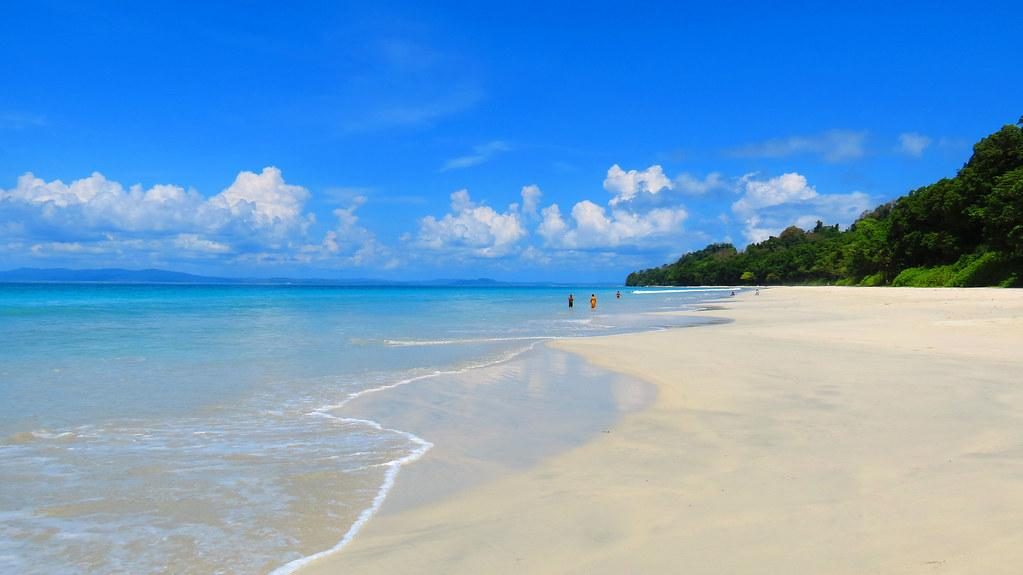
And then the last leg, over the border into Kerala, where the coastline softens and Kovalam does what Kovalam does. Two and a half hours from the end of India to a beach with a lighthouse on it. After four days of temples and driving, that final night is deliberate. You need somewhere to put all of it down.
[YOUR PARAGRAPH: which hotels you use and why. Whether you recommend the Padmanabhaswamy detour. What you tell people who ask about travelling this route in July. Anything your drivers know that a website does not.]